Before the Needle: What a Great Fine-Line Consultation Actually Looks Like

Photo by Photo by Feelfarbig Magazine on Unsplash on Unsplash
A lot of people treat the tattoo consultation like a formality. You show the artist your reference image, they say it looks good, you pick a date. Done.
For a bold traditional piece, that approach might get you most of the way there. For fine-line work? It's not even close to enough. The consultation is where a fine-line tattoo is either set up to succeed or quietly set up to disappoint — and the difference comes down to how much real conversation happens before anyone picks up a needle.
Why Fine-Line Consultations Are a Different Animal
Precision tattooing operates on tighter margins than almost any other style. A line that's a fraction of a millimeter off in fine-line work is visible in a way it simply wouldn't be in a bolder design. Details that seem straightforward in a reference image can become technically impossible when translated to skin — especially on certain body placements, skin types, or scales.
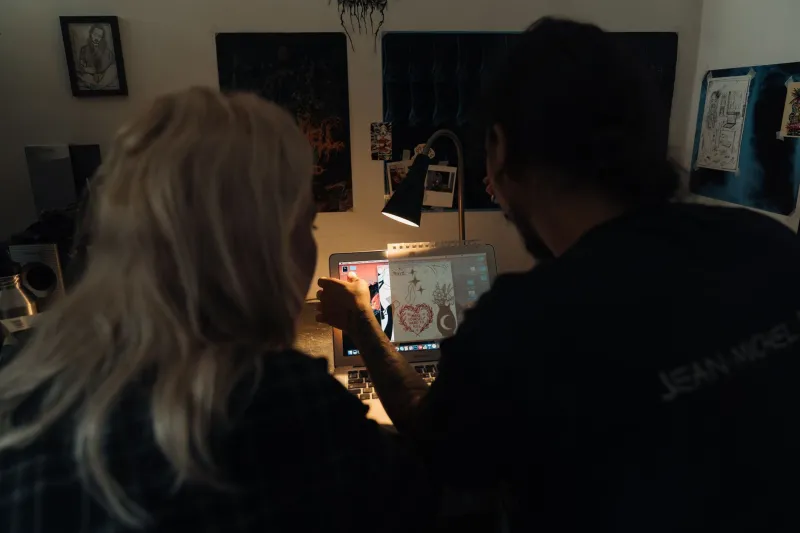
That's why experienced fine-line artists approach consultations less like a sales call and more like a design review. They're not just confirming that they like your idea. They're stress-testing it — looking for places where the concept might not translate, where your expectations might not match what the medium can actually deliver, and where they might need to push back.
For clients, this can feel unexpected. But it's exactly what you want.
The Questions That Actually Matter
A skilled fine-line artist typically comes into a consultation with a mental checklist that goes well beyond "what do you want and where do you want it?"
They're asking things like: How does this design scale? Reference images pulled from Pinterest or Instagram are often shot at a resolution and size that makes the detail look achievable — until you actually try to reproduce it on a three-inch area of skin. Artists who specialize in precision work know that some designs need to be simplified, enlarged, or restructured to work as a real tattoo.
They're also asking: What's the placement, and what does the skin do there? High-flex areas, spots prone to friction, and zones where the skin texture is naturally uneven all affect how fine-line ink behaves. An artist worth booking will flag these early, not after they've already started.
And they're asking: What's your skin like? Skin tone, texture, and history all factor into how fine-line work heals and how the finished piece will read. This isn't gatekeeping — it's the artist gathering the information they need to actually deliver on what you're envisioning.
Real Consultation Scenarios: What Alignment Looks Like
Imagine a client comes in with a reference image of a delicate botanical illustration — thin stems, intricate leaf veining, a few small flowers clustered together. They want it on their forearm, roughly three inches tall.
A great consultation might go something like this: the artist looks at the reference, acknowledges what they love about it, and then immediately starts asking questions. How important is the fine veining detail? Because at that scale, on that placement, some of it will likely blur over time. Would the client be open to slightly simplifying those elements to make the piece age better? What's their skin like — do they tend to scar easily, or have they had previous tattoos that healed smoothly?
By the time they leave that consultation, both parties are aligned on exactly what's being created, why certain choices are being made, and what the realistic outcome looks like. That's a successful consultation.
Now flip it: a client comes in with the same reference but resists every suggestion. They want it exactly as shown, same scale, same detail level, no adjustments. They've already decided what they want and the artist's job is just to execute it.
This is a red flag. Not because the client is difficult — but because the dynamic signals a fundamental misalignment between what the client is expecting and what the medium can deliver. A fine-line artist who cares about their work will recognize this and address it directly, even if that means slowing the process down or declining to book.
The Red Flags Artists Actually Watch For
Experienced fine-line artists develop a pretty good sense of when a consultation is trending toward a problem. Some of the common signals:
Unrealistic reference expectations. If a client's reference is a digitally rendered illustration with linework that would be physically impossible to reproduce at tattoo scale, and they're not open to any creative translation, that's a concern.
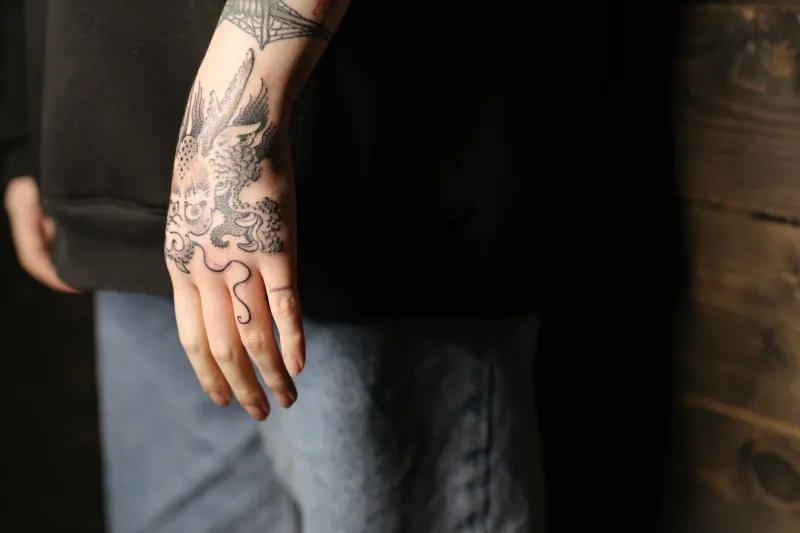
Placement pushback. When an artist flags a placement as risky — say, a highly detailed piece on the side of a finger, which is notoriously difficult to heal well — and the client dismisses the concern, it often means the artist will be blamed for a result that was structurally compromised from the start.
Rushed timeline. Fine-line artists often have waitlists for a reason. A client who's pushing hard to get in as soon as possible, skipping the consultation process, or downplaying the preparation stage is often someone who hasn't fully thought through what they're asking for.
Vague vision, firm expectations. Clients who can't clearly articulate what they want but are certain they'll know it when they see it put artists in an impossible position. Fine-line work requires specificity on both sides of the table.
What Good Alignment Feels Like
When a consultation goes well, both the artist and the client leave the room feeling like they're working on the same project. The client understands what's being made and why certain decisions were made. The artist feels confident they can deliver something they're proud of. There's mutual respect for what the other person brings to the process.
That's not a small thing. Fine-line tattooing is a collaboration between someone with serious technical skill and someone who's going to wear that work for the rest of their life. The consultation is where that partnership gets established — or doesn't.
If you're preparing for a fine-line consultation, go in ready to have a real conversation. Bring references, but hold them loosely. Ask questions. Listen to the answers. The artists who push back a little during consultations are usually the ones whose finished work you'll still love in twenty years.