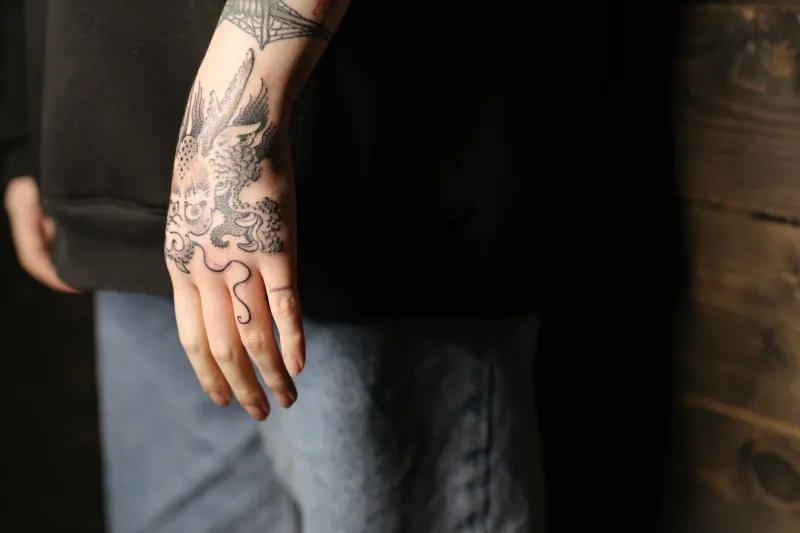
Precision Takes Over: How Fine-Line Tattooing Is Rewriting Industry Norms
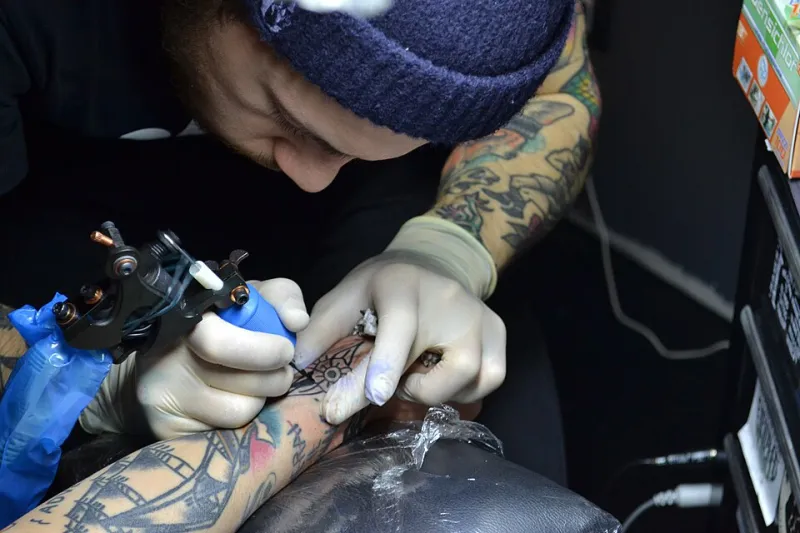
Photo: Technopop.tattoo, CC BY-SA 4.0, via Wikimedia Commons
For most of its modern history, the tattoo industry ran on a pretty consistent set of values: bold lines, saturated color, designs built to last and be seen from across a room. That aesthetic wasn't just a style preference — it shaped how artists trained, how studios operated, and what the culture considered technically impressive.
Then fine-line took off. And the industry hasn't quite looked the same since.
A Demand Shift That Caught a Lot of Studios Off Guard
The rise of fine-line tattooing in the US wasn't a sudden explosion — it was a slow build that accelerated dramatically through social media, particularly Instagram and Pinterest, where the delicate, illustrative quality of precision line work photographs beautifully and spreads fast. Clients who had never considered getting tattooed started booking appointments. Collectors who'd spent years building bold traditional pieces started adding fine-line work to the mix.
Studios that had built their reputations on traditional American, neo-traditional, or Japanese styles suddenly found their inquiry queues filling up with requests for botanical illustrations, minimalist geometric designs, and single-needle portraiture. Some were equipped to handle it. A lot weren't.
The artists who could do fine-line work well — really well — became some of the most sought-after in the country almost overnight. Their waitlists stretched out for months. Their booking fees climbed. And the rest of the industry started paying very close attention.
How Apprenticeship Models Are Evolving
The traditional tattoo apprenticeship model was built around fundamentals that prioritized bold execution: clean lines, solid fill, color saturation, and the ability to work across a range of conventional styles. Speed was valued. Versatility was valued. The ability to knock out a solid flash piece efficiently was considered a baseline competency.
Fine-line is changing what "fundamentals" means.
Studios that specialize in precision work are increasingly structuring apprenticeships around a different set of priorities. Needle control at minimal trauma depth. Understanding how single-needle and tight-grouping configurations behave differently across skin types. The ability to translate complex illustrative references into designs that will hold up long-term. Patience — the willingness to work slowly and deliberately rather than efficiently.
This isn't a rejection of traditional tattooing knowledge. The foundational understanding of how ink behaves in skin, how to read a client's skin tone and texture, how to structure a composition — all of that still matters. But the weighting has shifted. Apprentices at fine-line-focused studios are spending more time on drawing and illustration practice, more time studying how their reference work translates to skin at scale, and more time watching their mentors work slowly through complex detail rather than moving fast through simpler designs.
The result is a generation of emerging artists who are entering the industry with a fundamentally different skill emphasis than their predecessors — and who are, in many cases, finding immediate demand for that skill set.
Studios Are Restructuring Around Precision
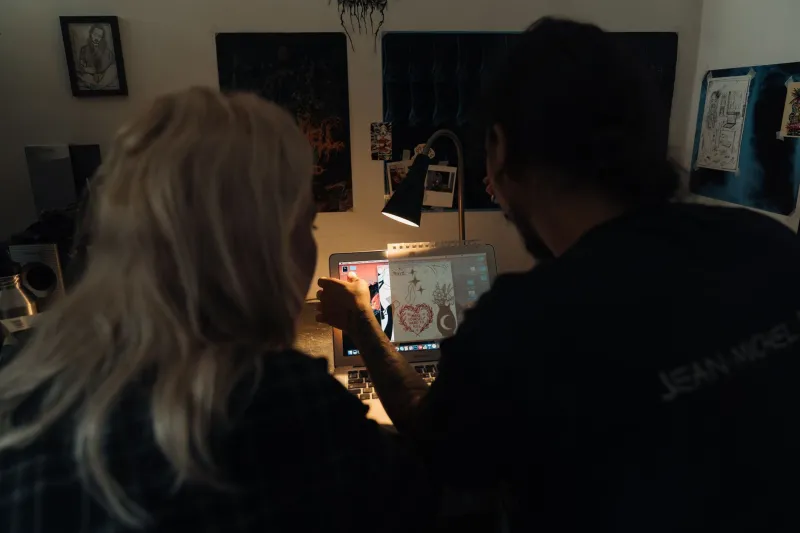
The operational footprint of a fine-line studio looks different from a traditional shop in ways that go beyond aesthetics. Appointment structures are longer and less transactional. A fine-line session that produces a three-inch piece might take two to three hours, with significant time built in for stencil placement, client consultation, and meticulous execution. The assembly-line efficiency model that some traditional shops run on doesn't translate.
Pricing structures have also shifted. Fine-line work commands premium rates not because of size or color complexity, but because of skill density — the level of precision required per square inch is genuinely higher. Studios that have leaned into fine-line as a specialty have had to educate their client base on why that premium exists, and most have found that clients who understand what they're paying for are happy to pay it.
The physical studio environment has evolved too. Fine-line work requires good light — precise, consistent, shadow-free illumination that lets an artist see exactly what they're doing at a level of detail that matters. Studios investing in fine-line have invested in their lighting setups, their ergonomics, and their equipment in ways that reflect the technical demands of the work.
The Gallery and Exhibition Shift
One of the more unexpected ripple effects of fine-line's rise has been its influence on how tattoo art is exhibited and celebrated outside of studio walls. Tattoo conventions across the US, which have historically centered on bold, large-scale work that photographs well and reads clearly from a distance, are increasingly carving out dedicated categories and spotlight features for fine-line and illustrative work.
Art galleries in major cities — New York, Los Angeles, Chicago, Austin — have been featuring tattoo artists with fine-line specialties more prominently, often presenting their design work as standalone illustration rather than just documentation of tattoos. The crossover between fine-line tattooing and the broader illustration and graphic design world has become genuinely porous in a way it wasn't a decade ago.
This visibility outside the traditional tattoo industry context is doing something important: it's repositioning tattooing as a fine art discipline in the eyes of audiences who might not have engaged with it otherwise. And it's doing so largely on the back of fine-line's visual language — its restraint, its detail, its resemblance to drawing and printmaking traditions that already have established fine art credibility.
What This Means for the Industry's Identity
There's a real conversation happening in the tattoo community right now about what fine-line's dominance means for the broader culture of the craft. Some traditionalists are wary — not of fine-line itself, but of the pressure it creates to deprioritize the bold, graphic, durable aesthetic that defined tattooing for generations and that remains genuinely beautiful and technically demanding in its own right.
That tension is worth taking seriously. Fine-line's rise shouldn't come at the cost of dismissing or devaluing other styles. The best version of this moment in the industry is one where precision work raises the overall standard of technical skill and intentionality across all styles — where the fine-line influence pushes every artist to think more carefully about line quality, composition, and longevity regardless of the aesthetic they're working in.
The evidence suggests that's actually happening. Artists across styles are talking more openly about needle control, skin health, and long-term design integrity than they were even five years ago. Fine-line didn't create those conversations, but it accelerated them.
And that's probably the most significant thing fine-line is doing to the industry — not replacing what came before, but raising the floor for what precision and intentionality look like across the board.