Thin Lines, Big Rules: The Science Behind Fine-Line Tattoo Healing

Photo by Photo by Yohann LIBOT on Unsplash on Unsplash
Most people assume a tattoo is a tattoo. You get inked, you slap on some ointment, you avoid the sun for a couple weeks, and you're good. But anyone who's invested in a fine-line piece — one of those delicate, hair-thin designs that looks like it was drawn with a mechanical pencil — knows that things don't quite work that way.
The healing process for fine-line work operates on its own timeline, with its own rules. And if you're treating your precision piece the same way your friend treated their bold traditional sleeve, you're setting yourself up for disappointment.
What's Actually Happening Under Your Skin
To understand why fine-line tattoos heal differently, you have to zoom in on what the needle is actually doing. With bold, heavily saturated work, the artist is making multiple passes over the same area, packing in ink across a wider surface. That repetition creates more trauma to the skin — more disruption to the dermis, more surface area to heal.
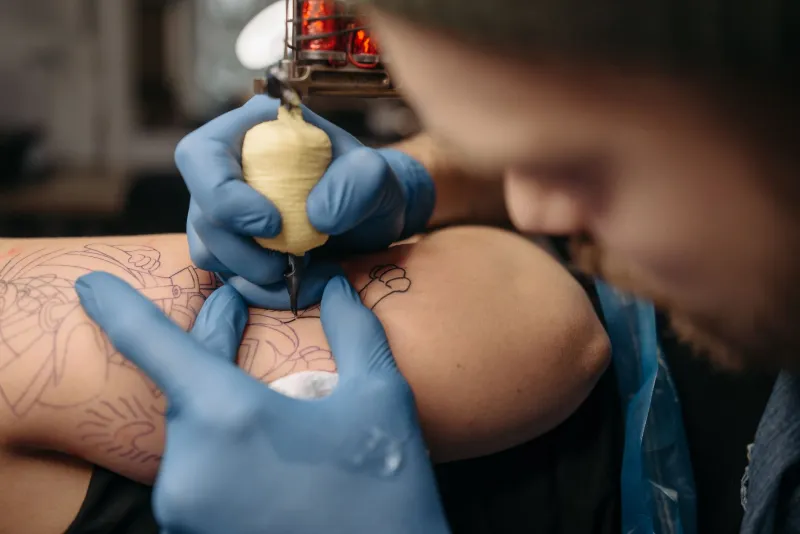
Fine-line work is the opposite. A skilled artist is depositing ink in single, precise passes using a needle configuration that's often just one to three points. The skin trauma is significantly more localized. Less disruption, smaller wound footprint, more targeted delivery.
Dermatologists who work with tattooed clients point out that this reduced trauma is actually one of fine-line's hidden advantages. Because the surrounding tissue isn't being repeatedly disturbed, the inflammatory response is typically milder. That means less swelling, less weeping, and a shorter initial healing window — sometimes noticeably so.
But here's the catch: that same precision that makes fine-line tattoos heal faster also makes them more vulnerable to disruption during recovery.
Why Moisture Balance Matters More With Fine Lines
With bold tattoos, over-moisturizing tends to be the main cautionary tale — too much ointment and you risk clogging pores, suffocating the skin, or pulling ink to the surface. Fine-line work flips the equation somewhat.
Because the skin disruption is more minimal, fine-line tattoos can dry out faster in the early stages. When the skin gets too dry, it tightens and flakes — and those flakes can pull at delicate lines that haven't fully anchored yet. The result? Gaps, fading, or uneven ink density in areas that should be crisp and continuous.
The goal is balance, not saturation. A thin, breathable layer of fragrance-free moisturizer applied two to three times a day is usually the sweet spot. You're keeping the skin supple without drowning it. Heavy petroleum-based products are generally a no-go for fine-line healing — they're too occlusive for work that needs to breathe.
Your artist will have specific product recommendations, and it's worth following them closely. This isn't generic advice — it's calibrated to how they work.
Sun Protection: The Timeline Is Different Here
Sun protection is important for every tattoo. But with fine-line work, the stakes are higher and the timeline is longer.
Bold, heavily saturated tattoos have a density of ink that gives them some built-in resilience. Fine-line tattoos don't have that buffer. The lines are thin, the ink deposits are precise, and UV exposure — even after the tattoo appears fully healed on the surface — can break down those delicate details faster than you'd expect.
Most experienced fine-line artists recommend keeping a fresh piece completely out of direct sunlight for a minimum of four weeks. After that, high-SPF sunscreen (50 or above) should become a regular part of your routine whenever that area of skin is exposed. Not just in summer. Not just at the beach. Whenever you're outside.
This isn't overcaution — it's protection for an investment. The difference between a fine-line tattoo that looks razor-sharp five years in and one that's turned soft and blurry often comes down to how seriously the client took sun protection in the first year.
Activity Restrictions: What Fine-Line Clients Often Skip
This is the part people tend to underestimate. Physical activity restrictions after a fine-line tattoo aren't just about keeping the area clean — they're about preventing mechanical disruption to lines that are still integrating into the skin.
High-impact activities, heavy sweating, and anything that stretches or compresses the tattooed area can affect how fine-line ink settles. Sweat is mildly acidic and can irritate healing skin. Friction from clothing or gym equipment can physically disturb a piece that isn't fully anchored. And excessive movement over a joint or a high-flex area can cause ink migration before the lines have stabilized.
The general guidance from artists and dermatologists aligns pretty consistently: keep intense physical activity to a minimum for the first two weeks, and be strategic about clothing that touches the tattoo during that period. Loose, breathable fabrics are your best friend.
If your tattoo is in a high-movement zone — inner arm, wrist, behind the knee, ribcage — your artist may extend that recommendation. Listen to them.
The Payoff for Doing It Right
Here's the thing about fine-line healing: when you get it right, the results are worth every careful step. A well-healed fine-line tattoo is a genuinely stunning thing — crisp, intentional, and exactly what you saw in the artist's portfolio when you booked.
The science behind it isn't complicated, but it does require you to pay attention. Balanced moisture, consistent sun protection, and smart activity management during the recovery window are the three pillars that separate a fine-line tattoo that ages beautifully from one that starts losing definition within months.
Your artist put serious skill into that piece. The aftercare is your part of the collaboration. Take it as seriously as they took the work.