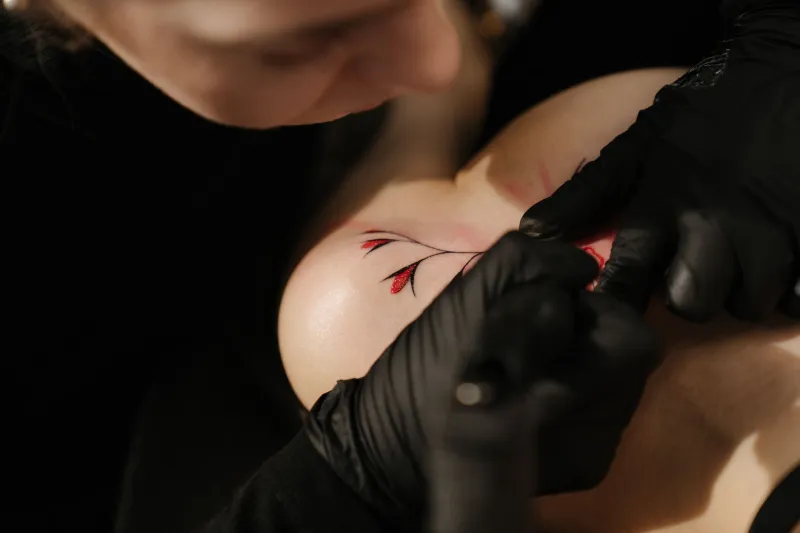
The Trust Blueprint: Why Fine-Line Tattoos Require a Whole Different Kind of Artist-Client Chemistry
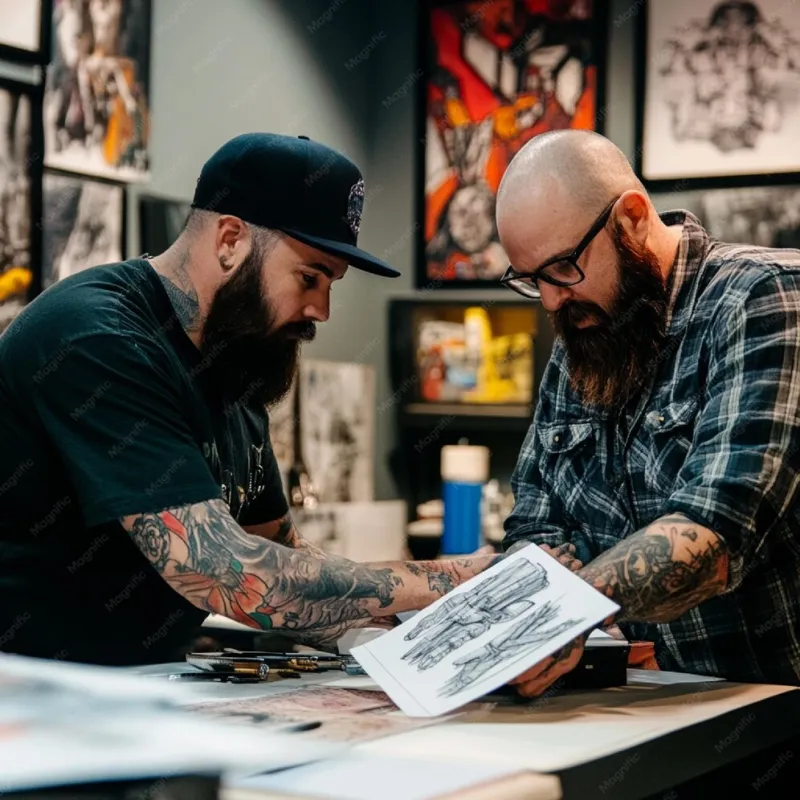
Photo: tattoo artist consulting with client over tattoo design sketch in studio, via img.freepik.com
Walk into any traditional tattoo shop, point at a flash sheet, and you can reasonably expect to walk out with something close to what you picked. The style is bold, the lines are thick, and there's a certain built-in forgiveness to the process. Fine-line tattooing is a completely different universe.
When you're working with ink lines thinner than a mechanical pencil scratch — sometimes placed on areas of the body that shift, stretch, and sweat — every decision carries more weight. And that means the relationship between the person holding the needle and the person lying on the table has to be built on something more than vibes and a quick Instagram DM.
This is what the tattoo world doesn't always say out loud: fine-line work lives or dies on communication.
Why Precision Changes Everything About the Dynamic
Bold, traditional tattooing has a built-in buffer. Thick outlines and heavy saturation can absorb small inconsistencies in placement, healing, or skin behavior. Fine-line work has no such buffer. A single misplaced hair-width line is visible in a way that a chunky tribal band never would be.
That reality puts both artist and client under a kind of microscope from the very start. The artist needs to understand not just what the client wants, but why they want it, where they're imagining it living on their body, and what their skin has been through. The client, meanwhile, needs to trust that the artist's expertise might sometimes redirect or refine their original vision — and that this redirection is a gift, not a dismissal.
This dynamic doesn't happen automatically. It has to be built, conversation by conversation.
The Consultation Is Where the Real Work Starts
For fine-line artists, the consultation isn't a formality — it's arguably the most important part of the entire process. A good consultation for precision ink work covers territory that most people don't think about until something goes wrong.
Placement conversations go deeper. Fine-line work doesn't behave the same way on every part of the body. The inner wrist, the ribcage, the back of the neck — these areas move, flex, and respond to the needle differently. A skilled fine-line artist will walk clients through why a design that looks perfect on a flat reference image might need to be scaled, rotated, or repositioned to survive long-term on a specific body location.
Reference images are a starting point, not a contract. Clients often arrive with a saved folder of inspo photos, and that's genuinely helpful. But a fine-line artist's job is to translate those references through the lens of their own technical knowledge — understanding that what works on one person's skin might need to be adapted for another's. Artists who explain this process up front, and clients who are open to hearing it, tend to end up with results that actually match the vision.
Lifestyle matters more than people think. A client who works outdoors in the Texas sun, swims competitively, or has a history of keloid scarring will need a different approach than someone with a desk job in Seattle. These conversations can feel personal, but they're essential data points for any artist who takes longevity seriously.
Setting Expectations Without Killing the Excitement
Here's the tricky part: fine-line artists have to be honest about the limitations of their craft without making clients feel like they're signing up for a risky experiment. That balance is a skill in itself.
The healed result of a fine-line tattoo almost always looks different from the fresh result — and sometimes dramatically so. Lines soften. Tiny details can blur slightly. Areas with more movement tend to settle differently than areas with less. A good artist will show clients healed photos of their own work, not just the glowing fresh shots that dominate Instagram.
This kind of transparency can feel scary for artists who worry it might cost them the booking. But in practice, clients who are prepared for the healing journey are far less likely to end up disappointed — and far more likely to come back for another piece.
The Psychology of Letting Go (For Both Sides)
There's a psychological dimension to fine-line tattooing that doesn't get talked about enough. For clients, agreeing to a fine-line piece means trusting an artist with something inherently permanent and deeply personal. That's a lot. It's normal to feel anxious, to second-guess, to want reassurance.
For artists, fine-line work requires a kind of focused vulnerability that heavier styles don't always demand. Every line is exposed. There's nowhere to hide behind saturation or shading. That level of exposure can make even experienced artists more invested in the client relationship — because when the work is this precise, the collaboration has to be real.
The best fine-line consultations create space for both parties to be honest. Artists can say, "I want to adjust this element because I know how it'll heal." Clients can say, "I'm nervous about this placement — can we talk through it?" Neither of those conversations is a red flag. They're both signs that the relationship is working the way it should.
What Red Flags Actually Look Like
Not every artist-client pairing is the right one for fine-line work, and knowing when to walk away is part of the process too.
For clients, a rushed consultation, an artist who dismisses placement concerns, or a portfolio that only shows fresh work (never healed) are worth paying attention to. Fine-line work demands patience and transparency from the person holding the machine.
For artists, a client who insists on design elements that the artist knows won't hold, or who refuses to engage with placement guidance, is a situation worth addressing directly before the session starts — not after.
The goal isn't a perfect transaction. It's a collaboration that respects both the art form and the person wearing it.
Precision Ink Is a Partnership
At the end of the day, fine-line tattooing is one of the few areas of body art where the relationship between artist and client genuinely shapes the outcome. Not just the design, not just the technique — the outcome, the thing that person will carry on their skin for the rest of their life.
That's worth taking seriously. And the studios and artists who understand this — who invest in the communication side of their craft as much as the technical side — tend to produce not just better tattoos, but better experiences all around.
Precision ink, after all, isn't just about what the needle does. It's about everything that happens before it ever touches skin.