The Long Game: How Fine-Line Tattoos Actually Hold Up Over the Decades

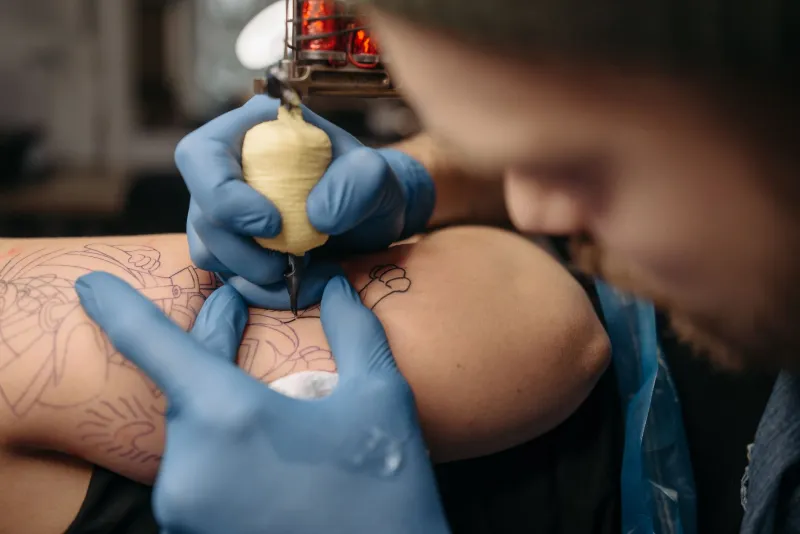
Photo by Photo by Eva Greenberg on Unsplash on Unsplash
Let's address the elephant in the room immediately: yes, fine-line tattoos can blur and fade over time. So can bold traditional tattoos. So can watercolor pieces, geometric designs, and every other style in the book. Aging is a factor in all tattooing — the question has never been if your ink will change, but how, how much, and what you can do about it.
For fine-line tattoos specifically, that conversation tends to get muddled by a lot of anxiety-driven social media posts and not quite enough honest, grounded information. So let's change that.
How Skin Actually Ages — and What It Means for Fine Lines
To understand how fine-line tattoos age, it helps to understand what's happening beneath the surface. Tattoo ink sits in the dermis, the layer of skin beneath the outer epidermis. Over time, a few things happen that affect how that ink looks from the outside:
Sun exposure breaks down pigment. UV radiation degrades tattoo ink, causing colors to fade and black ink to shift toward a softer, slightly gray tone. This affects all tattoo styles, but fine-line work — which relies on precise, thin deposits of ink — is more sensitive to this because there's simply less ink to absorb the damage before the design starts looking faded.
Skin loses elasticity. As we age, collagen production slows and skin begins to lose some of its firmness. This can cause fine lines to spread slightly, particularly in areas prone to stretching — the inner elbow, stomach, and thighs being the most obvious examples. Placement matters enormously here.
The body's immune system keeps working. Your immune system views tattoo ink as a foreign substance and continuously works to break it down, albeit slowly. Over decades, this contributes to the gradual softening of sharp lines — a process that happens in all tattoo styles but is more visually apparent in fine-line work where precision is the whole aesthetic.
What Artists Who've Been Doing This for Years Actually Say
Fine-line tattooing as a widely practiced style is relatively young — it exploded in popularity in the US through the 2010s, meaning we're only just now starting to see substantial numbers of fine-line pieces that are a decade or more old. But experienced artists who have been in the industry long enough to track their own early fine-line work have some genuinely useful observations.
The consistent takeaway? Placement and aftercare are the biggest predictors of long-term quality — more than style alone.
Artists report that fine-line pieces done on stable skin areas — the upper arm, upper back, calf, and outer forearm — tend to hold their detail remarkably well over ten-plus years when clients have been diligent about sun protection. Pieces done in high-friction or high-movement areas, or on clients who spent years without sunscreen, show significantly more softening and spread.
One thing that surprises many clients when they see decade-old fine-line work: the tattoos often look softer rather than distorted. Lines don't necessarily blur into unrecognizable shapes — they tend to settle into a slightly less crisp version of themselves, which many clients actually find beautiful. There's a warmth to aged fine-line work that's different from but not necessarily worse than its original precision.
Comparing Fine-Line Aging to Traditional Bold Work
The comparison that often gets made — and often unfairly — is between fine-line tattoos and traditional American or Japanese bold-line tattoos. The argument goes: thick lines hold up better, therefore fine-line is a bad long-term investment.
The reality is more complicated. Yes, thick bold lines have more ink density, which means they have more buffer against fading and spreading before the design looks compromised. A traditional eagle tattoo from the 1980s might still read clearly at fifty years old in a way that a hair-thin botanical sketch from 2015 might not.
But that comparison ignores a few important factors:
- Most fine-line clients aren't choosing between fine-line and traditional — they're choosing fine-line because the aesthetic is fundamentally different and more aligned with what they want.
- Touch-up accessibility is much higher now than it was for people who got tattoos decades ago. A fine-line piece that needs a refresh at the fifteen-year mark is a relatively minor appointment with a skilled artist, not a major undertaking.
- Design choices within fine-line work matter enormously. A fine-line piece with strong silhouettes, meaningful negative space, and minimal filled areas will age far better than one that relies on extremely delicate micro-detail throughout.
Design Styles That Stand the Test of Time
If longevity is a priority for you — and it should be, even if it's not your only priority — certain design approaches within fine-line tattooing are better bets than others.
Botanical and floral line work tends to age beautifully because the organic, flowing nature of the designs means slight softening of lines reads as natural rather than degraded. A rose outline that's settled a little over ten years still looks like a rose.
Geometric designs with clean, simple lines hold up well in stable placement areas. The precision may soften slightly, but strong geometric forms remain recognizable.
Single-needle micro-detail work — the ultra-fine portraiture and intricate shading that's stunning fresh — is the most vulnerable to aging. These pieces can lose critical detail over time, especially without consistent sun protection and touch-ups.
Script and lettering falls somewhere in the middle. Simple, well-spaced lettering in a clean font holds better than tightly packed cursive with thin strokes.
Maintenance Is Not Optional — It's Part of the Investment
Here's the mindset shift that changes everything: a fine-line tattoo isn't a one-time transaction. It's an ongoing relationship with your skin and your artist.
The single most impactful thing you can do for your fine-line tattoo's longevity is apply SPF 30 or higher to the area every single day once it's fully healed. This isn't a casual recommendation — UV exposure is the number one accelerator of tattoo fading, and it's entirely preventable.
Beyond sun protection:
- Keep skin moisturized consistently. Healthy, hydrated skin holds ink better over the long term.
- Schedule a touch-up when needed, not when it's urgent. Catching a fine-line piece at the five or seven-year mark for a light refresh is far more effective than waiting until lines have significantly spread.
- Avoid rapid, significant weight changes where possible, as these can stretch and distort placements in ways that are difficult to correct.
What to Realistically Expect at the Fifty-Year Mark
Let's be honest: a fine-line tattoo at fifty years old will look different from the day it was done. The lines will have softened. Some detail may have faded. The ink may have shifted toward a slightly warmer, less stark tone.
But here's the thing — the same is true of every tattoo on every body at fifty years. The question is whether the piece still carries meaning and still looks intentional. Fine-line tattoos, done well and cared for properly, absolutely can. The key is going in with clear eyes, choosing your artist and design thoughtfully, and committing to the maintenance that makes longevity possible.
Precision ink is built to last. You just have to meet it halfway.