Two Lines, One Story: The Smart Way Couples Are Getting Tattooed Together Without the Regret
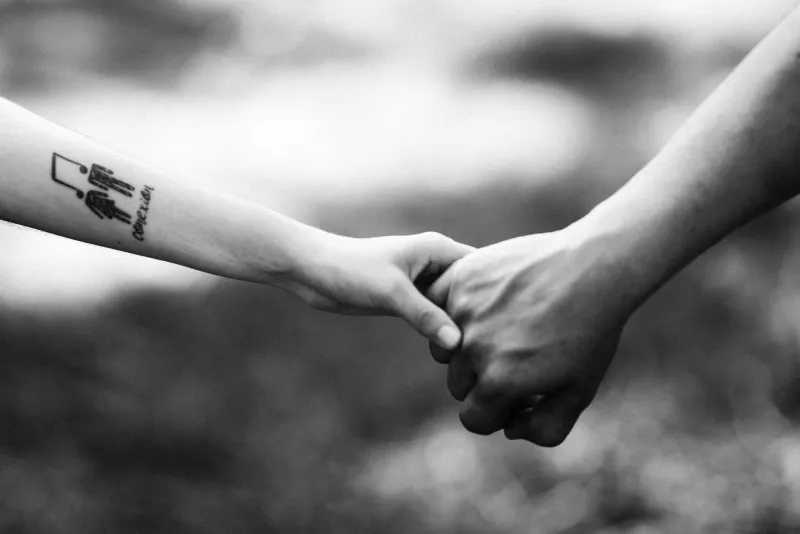
Let's be honest about the matching tattoo stigma. The jokes write themselves. The Reddit threads are brutal. The "tattoo cover-up" content on social media practically has its own genre at this point, full of cringe-worthy initials and overlapping hearts that didn't survive the year.
And yet — couples keep getting tattooed together. In fact, they're doing it more than ever. The difference is that a growing number of them are doing it smarter, and fine-line tattooing is a big part of why.
Why Fine-Line Changes the Equation
The traditional critique of couples' tattoos is essentially an aesthetic one: they're too literal, too loud, too on-the-nose. A name banner. Matching portraits. Interlocking puzzle pieces. These designs announce the relationship so explicitly that when the relationship ends, the tattoo becomes a monument to poor judgment.
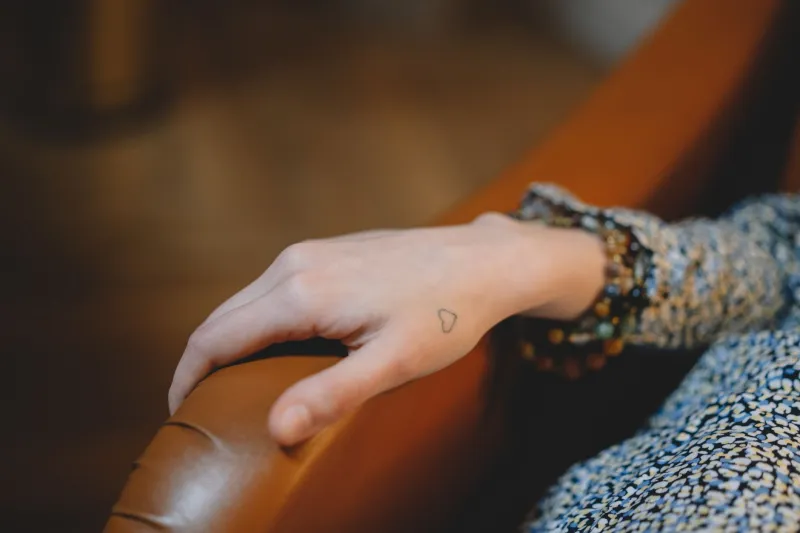
Fine-line work sidesteps this trap almost by design. The minimalist nature of the style encourages restraint. The precision required rewards thoughtfulness over impulse. And the delicate aesthetic lends itself to concepts that are personal without being possessive — symbols that carry meaning for two people without requiring a shared context to remain beautiful.
A fine-line illustration of a specific flower. A single coordinate. A fragment of a longer line that forms a complete image when placed next to the other person's arm, but reads as abstract art on its own. These aren't just clever design solutions. They're a fundamentally different philosophy about what a couples' tattoo should actually do.
"I always ask couples to tell me what this piece would mean if they were the only one who had it," says a Los Angeles-based fine-line artist who estimates that coordinated couples' work makes up roughly a third of her bookings. "If they can't answer that, we're not ready to start designing yet."
The Art of Designing for Independence
The best couples' fine-line tattoos share a quality that might seem counterintuitive: they work as solo pieces first. The connection between them is a bonus, not the entire point.
This is where the skill of a fine-line artist becomes genuinely important. Designing two pieces that are clearly related — in theme, in visual language, in scale — without being codependent requires a real understanding of composition and narrative. It's a harder design problem than it looks.
Some approaches that fine-line artists use with couples:
Shared imagery, different perspectives. Two people might both get a fine-line rendering of the same mountain range, but from slightly different vantage points. They reference each other. They don't require each other.
Complementary fragments. A piece that looks like a complete abstract design on each person but forms a larger image when held together — like two halves of a broken coin. The individual pieces are whole. The connection is a discovery.
Parallel symbolism. Rather than identical designs, each person gets something that speaks to the same theme in their own visual language. Sun and moon. Two different wildflowers from the same meadow. The same date rendered in different typographic styles.
A shared reference, personally interpreted. If a couple bonded over a specific film, a place, a piece of music — each person gets a fine-line element that represents their individual connection to that thing. Related but not replicated.
What the Psychology Actually Says
There's a tendency to dismiss couples' tattoos as impulsive, but the psychology of permanent commitment markers is more interesting than that framing suggests.
Research on commitment rituals — the formal and informal ways couples signal permanence to themselves and to each other — consistently shows that physical markers of commitment can actually strengthen relationship investment. The act of choosing a shared symbol, sitting together through the experience, and carrying it afterward creates a kind of behavioral consistency that reinforces the relationship's significance.
The problem historically wasn't the impulse. It was the design. A tattoo that only makes sense in the relationship leaves you stranded the moment the relationship ends. A tattoo that makes sense regardless of relationship status is a completely different object.
Fine-line's aesthetic restraint naturally pushes couples toward the latter. When you're working with a minimalist style that rewards subtlety, you're less likely to end up with something that screams a person's name across your forearm.
Real Couples, Real Ink
Consider a couple from Austin who came in wanting something to mark their fifth year together. They'd traveled extensively in the Southwest and settled on fine-line saguaro cacti — each person's rendered slightly differently in height and silhouette, like two distinct plants from the same desert. Individually, each tattoo is a clean, beautiful botanical illustration. Together, they tell a specific story. "Even if we weren't together anymore," one of them noted, "I'd still love this tattoo. It's mine. It's just also ours."
Or a pair of friends — not a romantic couple — who got coordinated fine-line pieces after a difficult shared experience. Two different constellations that were visible from the same sky on a specific night. The friendship framing actually highlights something important: the "couples' tattoo" conversation applies to any meaningful relationship, and fine-line's flexibility makes it suitable for all of them.
The Practical Conversation to Have Before You Book
If you and your partner are considering coordinated fine-line work, here's what experienced artists suggest you work through before the consultation:
Give it time. The impulse to commemorate a relationship is natural, but the best couples' tattoos come from a place of settled certainty, not new-relationship energy. Most artists recommend waiting at least a year before booking coordinated work.
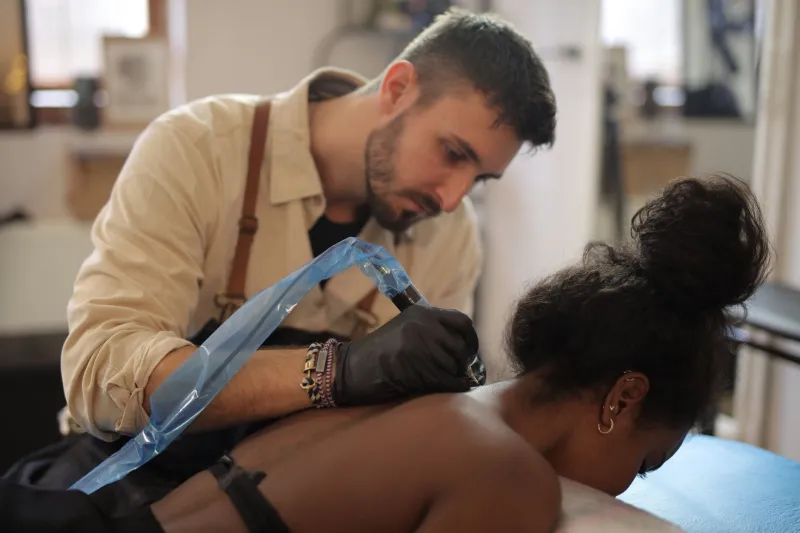
Design independently first. Have each person sketch or describe what they'd want if they were getting a solo tattoo on the same theme. Bring those ideas to the consultation and let the artist find the thread between them.
Avoid names and dates as the primary design element. Names can be incorporated, but they shouldn't be the whole piece. A date alone is fragile — it can become a painful anniversary. A beautiful design that includes a date is much more resilient.
Choose a fine-line artist who does couples' consultations. Not every artist is comfortable navigating this specific design challenge. Look for someone who asks hard questions and pushes back thoughtfully.
Matching tattoos have always been about wanting to mark something that matters. Fine-line just finally gave couples the tools to do it without painting themselves into a corner.