Ninety Minutes of Steady Hands: What Actually Happens During a Fine-Line Session
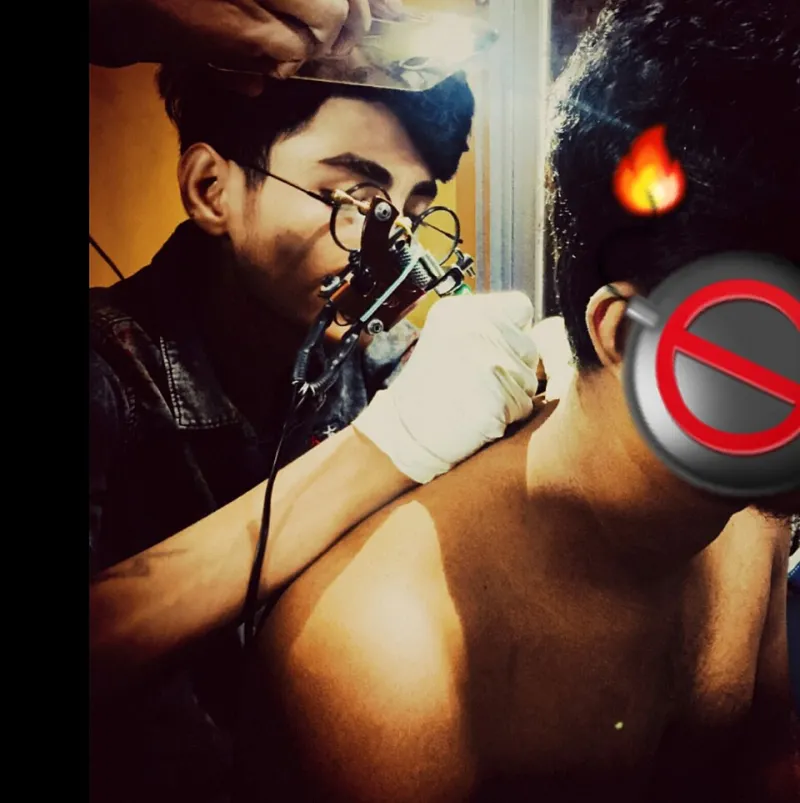
Photo: munshiganjtattooart, CC BY-SA 4.0, via Wikimedia Commons
The anticipation is almost always worse than the appointment. Ask anyone who's sat in a fine-line chair for the first time and they'll tell you the same thing: the scariest part was the week before, not the needle itself.
Part of that fear is just mystery. Most first-timers have no idea what a session actually involves — what the room looks like, what gets touched, how long the quiet parts last. So let's walk through it, start to finish, the way it unfolds in studios across the country every day.
Before You Sit Down
By the time you arrive, your artist has already done hours of work. Your design has been drawn, sized, and redrawn. Needles are sterile and sealed. Surfaces have been barrier-wrapped in plastic — you'll notice this on clip cords, machine handles, and light fixtures. It looks excessive. It's standard.
Plan to arrive with clean skin, hydrated, and fed. A real meal beforehand matters more than people think; low blood sugar plus adrenaline is a rough combo. Skip the pre-appointment drink, too — alcohol thins your blood and most studios will turn you away for it.
The Setup Ritual
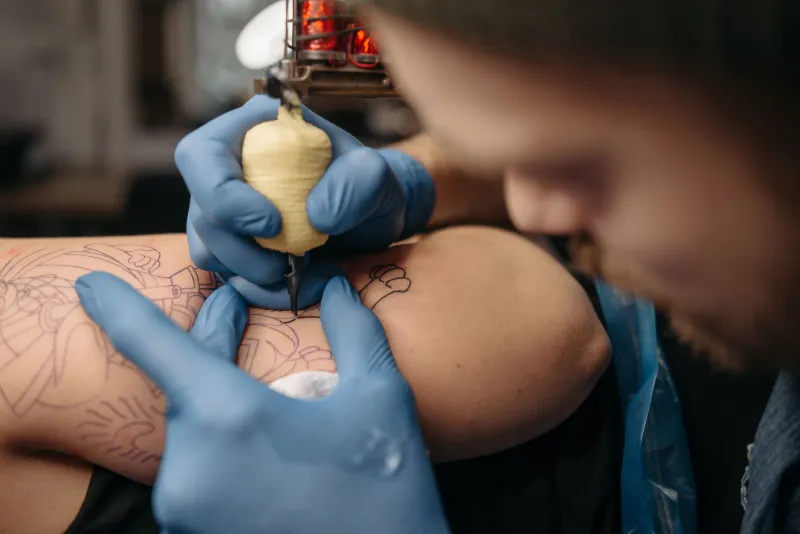
The first ten minutes of your appointment aren't about you, and that's a good thing. Your artist gloving up, tearing open needle packages, decapping ink caps, and laying out their station is a choreography you want done carefully, not quickly.
In fine-line work, the setup has a specific flavor. You'll likely see a smaller machine — many precision artists use lightweight rotary machines or even pen-style devices that behave more like a fine pen than a traditional shader. The needle configuration matters too: single-needle and tight round-liner setups (a 3RL, say) are the workhorses here, creating strokes thin enough to read as pencil work on skin.
Don't be shy about asking questions during setup. Every reputable artist will happily narrate. If a studio bristles at "what's that for?" — that's information about the studio, not about you.
Stencil Check: Your Last Easy Exit
Once the area is shaved (if needed) and cleaned, your artist applies the stencil — the temporary transfer of your design. Then comes a step that deserves more respect than it gets: they'll hand you a mirror and let you really look.
Check it from every angle. Sit, stand, raise your arm. This is the moment to say "actually, can we tilt it a little?" Nobody worth their ink will be offended. Adjusting a stencil takes thirty seconds; adjusting a healed tattoo takes laser appointments and regret.
The Work Itself
Here's what surprises most first-timers: fine-line tattooing is quiet and slow. The machine hums at a lower, steadier register than the loud coil buzz people expect from movies. And the pace is deliberate — precision artists work in short, controlled stretches, wiping away excess ink frequently to check their progress.
How does it feel? Most people describe it as a scratching or light stinging — annoying more than painful. Areas over bone (ribs, ankle, spine) run spicier; fleshy spots like the outer thigh are famously easy. Plenty of clients chat through the whole thing. Plenty doze off. Both are normal.
Expect breaks. A two-hour fine-line piece might involve the artist stretching, you stretching, and periodic pauses to assess the linework under good light. This stop-start rhythm isn't hesitation — it's how precision work stays precise.
The Wrap-Up and the Walkthrough
When the last line is laid, your artist cleans the area, applies a covering — often a breathable adhesive bandage these days — and walks you through aftercare with specifics: when to remove the covering, what soap to use, how much moisturizer, what to avoid. Take a photo of the aftercare sheet. You will not remember it, and neither should you rely on vibes.
You'll also get a realistic picture of healing: fine-line pieces can look deceptively faint during healing as the skin regenerates over the lines, and some settling and softening in the first weeks is expected, not a flaw.
The Nervous First-Timer's Cheat Sheet
- Eat a full meal an hour or two before
- Wear clothing that gives easy access to the placement
- Bring headphones if you'd rather zone out
- Speak up during the stencil check — it's the cheapest revision you'll ever get
- Ask about touch-ups; most artists include one within a certain window
By the time you walk out — with a small piece of permanent art and a sheet of instructions you'll actually follow — the mystery that made you nervous will have dissolved into something closer to routine. Which is usually right around when people start planning the next one.