Scrolling Toward the Needle: When the Algorithm Decides Your Tattoo

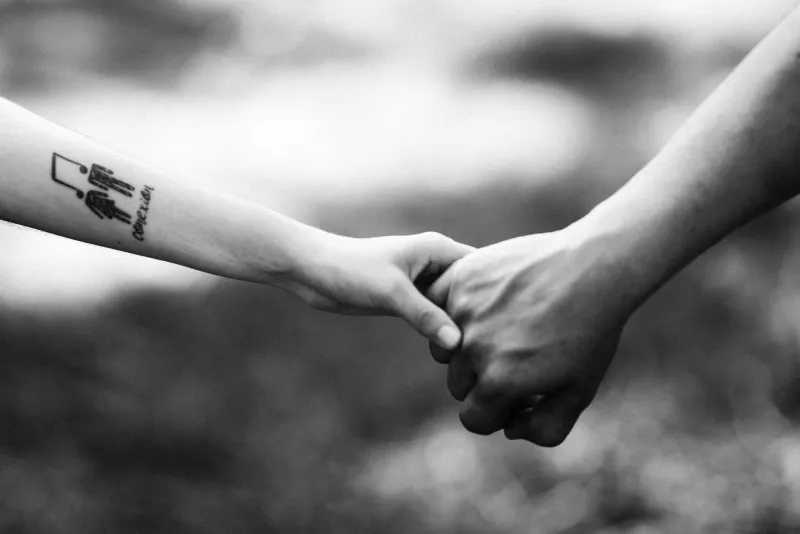
Photo by Photo by Cemrecan Yurtman on Unsplash on Unsplash
Somewhere between your third tattoo TikTok of the evening and the fifteenth fine-line floral reel in your Instagram feed, something shifts. You stop just admiring and start planning. You screenshot. You save. You build a folder on Pinterest titled something like "maybe someday" that quietly becomes "definitely soon."
This is the reality of how a huge portion of fine-line tattoo clients in 2024 arrive at the consultation chair — with a phone full of algorithm-curated inspiration and a genuine question about where their taste ends and the internet's influence begins. As someone writing about this industry, I think it's worth being honest: social media has done extraordinary things for fine-line tattooing's visibility, and it's also introduced some genuinely complicated dynamics that both clients and artists are still working through.
The Undeniable Upside
Let's start where credit is due. Before Instagram made fine-line tattooing a visual phenomenon, most people in mid-size American cities had no idea this style even existed as a distinct discipline. If you grew up in, say, Columbus or Boise or Charlotte, your mental image of tattoo art was probably shaped by what was available locally — which often meant bold traditional work, tribal designs, or old-school flash.
Social media changed the discovery equation completely. A teenager in rural Tennessee can now find and follow a fine-line specialist in Los Angeles, watch their process videos, study their portfolio, and arrive at a consultation years later with a genuinely sophisticated understanding of what they want. That's remarkable, and it's directly contributed to the explosion of fine-line tattooing as a mainstream style across the country.
Artists have also benefited enormously. Building a following on Instagram or TikTok has allowed talented fine-line specialists to fill their books without relying solely on walk-in traffic or word of mouth. Clients come pre-educated about the artist's aesthetic, which makes consultations more efficient and often results in better collaboration.
But Here's Where It Gets Complicated
The same algorithmic machinery that surfaces beautiful fine-line work also creates trends — and trends, by definition, are temporary. The problem with permanent ink is that it doesn't care about trend cycles.
Right now, certain aesthetics are absolutely dominating social media fine-line content: maximalist floral sleeves with intricate botanical detail, geometric micro-art with sacred geometry influences, ultra-delicate single-needle portraiture, and ornamental patterns inspired by South Asian and Southeast Asian traditional art. These are genuinely beautiful styles, and many of them are being executed brilliantly by talented artists.
But when a design goes viral — when a specific rose placement or a particular style of moon-and-stars arrangement gets shared enough times to become ubiquitous — something important gets lost. The design stops being an expression of individual identity and becomes a visual shorthand. And clients who choose it because it's trending rather than because it resonates personally may find themselves, a few years down the line, with a tattoo that feels like a timestamp rather than a statement.
This isn't hypothetical. Artists at fine-line studios across the US will tell you they field requests for the same designs in waves — a specific style will blow up on TikTok and suddenly everyone wants it. Some of those clients have thought deeply about why that design speaks to them. Many haven't.
The Pressure Artists Are Navigating
From the artist's perspective, social media has created a genuinely tricky tension. The work that performs best online — dramatic, high-contrast, visually striking — isn't always the work that holds up best on skin or serves the client's long-term interests most effectively.
An artist who builds their following around ultra-fine micro-detail work may feel pressure to keep producing content in that style even when a client's skin type or placement choice makes it a risky approach. The work needs to look good in a freshly-healed photo for the 'gram, but what happens six months later when the client is living with the results and the artist has moved on to the next project?
There's also the replication question. Clients frequently arrive with a screenshot of another artist's work and ask for an exact copy. This puts fine-line artists in an uncomfortable position — their craft is deeply personal, their style is something they've developed over years, and being asked to reproduce someone else's signature work feels like a creative and ethical compromise. The best artists will redirect these conversations toward original work that captures the spirit of what the client admires without copying it directly. But the pressure to just say yes, especially for artists still building their client base, is real.
How to Build a Tattoo Vision That's Actually Yours
None of this means you should throw out your Pinterest board. Saved images are genuinely useful reference material — they communicate aesthetic preferences, scale, placement ideas, and mood in a way that's hard to articulate verbally. The goal isn't to ignore social media entirely. It's to use it as a starting point rather than a final answer.
A few approaches that tend to produce more personally meaningful results:
Sit with saved images for longer than feels comfortable. If you saved something last week and you're already ready to book it, wait. Save it again in a month. If it still feels right, you're probably not just chasing a trend.
Ask yourself why, not just what. Why does this design appeal to you? What does it represent? If you can't answer that question in a way that has nothing to do with how many likes the original post got, keep thinking.
Tell your artist about your life, not just your aesthetic. The best fine-line consultations happen when clients bring their artist into the story behind the tattoo. A skilled artist can translate personal meaning into a custom design that references current trends without being defined by them.
Follow artists whose overall body of work you admire, not just their viral pieces. Anyone can have one great post. Look at the full portfolio. If the consistency and craft hold up across many different pieces, that's an artist worth investing in.
Be honest about your motivations. There's nothing wrong with wanting a tattoo that looks beautiful in photos. Aesthetics are valid. Just be honest with yourself if that's the primary driver, and make sure the design also holds personal meaning that will outlast the trend cycle.
The Algorithm Doesn't Know Your Story
Fine-line tattooing at its best is a deeply personal art form. The precision, the restraint, the intentionality — these qualities make fine-line work uniquely suited to carrying individual meaning. A well-executed fine-line piece can encode an entire chapter of someone's life into something no bigger than a playing card.
Social media is a tool for discovery, not a substitute for self-reflection. The most meaningful tattoos people carry — the ones they're still glad about at forty, at fifty, at sixty — are the ones that came from somewhere real. Not from a trending audio clip, not from a design that hit a million views, but from a conversation between a client who knew what they wanted to say and an artist skilled enough to help them say it.
Scroll all you want. Just make sure the final decision comes from you.