Tiny Ink, Towering Meaning: The Real Story Behind the Micro-Tattoo Movement

Photo by Photo by Liana S on Unsplash on Unsplash
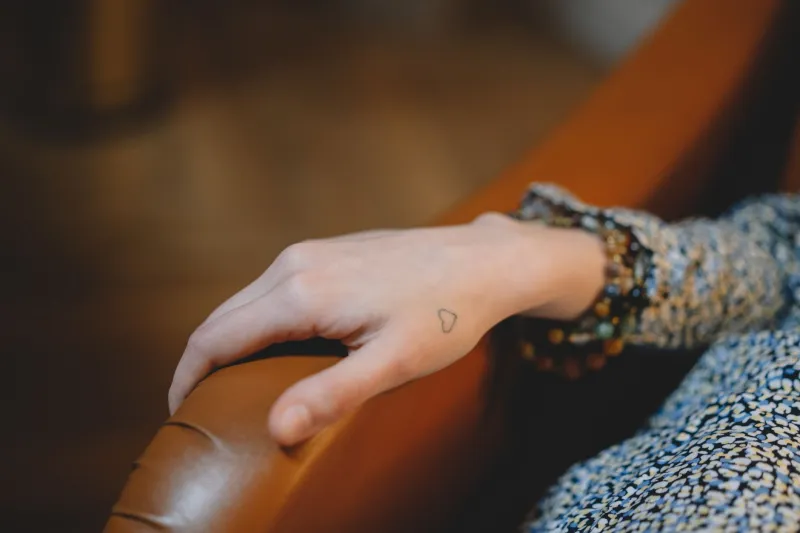
There's something almost counterintuitive about a tattoo you have to lean in close to see. And yet, micro-tattoos — those intricate little designs tucked onto fingers, wrists, behind ears, and along collar bones — are consistently among the most requested styles at fine-line studios right now. They don't shout. They don't demand attention. And somehow, that's exactly the point.
If you've been thinking about getting your first tattoo, or you're a collector who's running out of real estate, micro-tattooing might be the conversation you didn't know you needed to have.
What Actually Counts as a Micro-Tattoo?
There's no official measurement that defines a micro-tattoo, but in practice, most artists consider anything under about two inches — often closer to one inch or less — to fall into this category. We're talking fingernail-sized botanical sketches, tiny constellations, single-word scripts in delicate lettering, and miniaturized portraits that somehow manage to hold expression at a fraction of the size you'd expect.
The key distinction isn't just scale, though. It's execution. Micro-tattoos live or die by the precision of the needle work. At that size, every hair-thin line matters. There's no room to fudge details or rely on shading to carry the composition. This is where fine-line tattooing and micro-tattooing overlap almost completely — the same technical discipline that defines fine-line work is what makes micro designs possible in the first place.
Why People Are Choosing Smaller
The reasons clients are gravitating toward micro-tattoos are as varied as the designs themselves, but a few themes come up again and again.
First-timers love the low stakes. For someone who's been tattoo-curious but commitment-shy, a small piece on the inner wrist or behind the ear feels manageable. The healing process is faster, the pain is typically more tolerable, and if life circumstances change, a micro-tattoo is far easier to work around — or even laser — than a larger piece. It's a way of testing the waters without cannonballing in.
Collectors are using them as connective tissue. On the other end of the spectrum, people with existing tattoo collections are increasingly using micro pieces to fill gaps between larger works, create cohesive sleeve narratives, or mark milestones in a more understated way. A small date tucked inside a wrist. A tiny symbol near an existing floral piece. These additions often end up being some of the most emotionally loaded tattoos in an entire collection.
Workplace and social flexibility matters. Let's be real — not every job or family situation is tattoo-friendly. Micro-tattoos placed strategically can be hidden under a watch, a ring, a collar, or simply by positioning the hand a certain way. That flexibility opens up tattooing to people who might otherwise feel like it's not an option for them.
Placement: Where Micro-Tattoos Work Best
Not every spot on the body is equally suited for tiny work, and this is something a good fine-line artist will walk you through during your consultation. A few placement considerations worth knowing going in:
Fingers are popular but tricky. Finger tattoos in general fade faster than almost any other placement because of constant hand washing, friction, and skin movement. At micro scale, this effect is amplified. That doesn't mean you shouldn't get one — just go in with realistic expectations and a willingness to touch up.
Behind the ear and along the collarbone are sweet spots. These areas tend to hold fine detail well, sit relatively flat, and the skin doesn't experience the kind of constant movement that speeds up fading. They're also naturally framed by the body in a way that makes even a tiny design feel intentional and composed.
Inner wrist and inner forearm work beautifully. Skin here is smooth and consistent, which gives fine-line micro work a clean canvas. The visibility is also adjustable depending on how you hold your arm — a nice bonus for people navigating professional settings.
Ribs, sternum, and ankles are other go-to placements, though pain tolerance plays a bigger role in those spots.
Designing for Small: What Changes When You Scale Down
Here's where things get genuinely interesting from an artistic standpoint. Scaling down a complex image isn't as simple as shrinking it in Photoshop. At micro size, design elements that read clearly at four inches can become an indecipherable blur at one inch. This is why experienced fine-line artists often redesign a concept entirely when translating it to micro scale rather than just reducing it.
A few design principles that hold up at small sizes:
- Simplicity wins. The fewer elements competing for space, the stronger the final result. A single botanical stem with two or three leaves often reads better at micro scale than a full bouquet.
- Negative space is your friend. Leaving breathing room between elements prevents the design from looking muddy as lines settle into the skin over time.
- Avoid filled-in sections. Solid black areas at micro scale can bleed and spread in ways that distort the design. Fine-line shading or stippling tends to hold better.
- Bold concepts, minimal detail. A crescent moon, a tiny wave, a simple geometric shape — strong silhouettes with clean outlines are the backbone of micro-tattoo design.
When you're working with a fine-line artist on a micro piece, come prepared to collaborate. Your reference image is a starting point, not a blueprint. The best artists in this space will tell you honestly what will and won't translate, and they'll offer alternatives that honor your vision while setting the tattoo up for long-term success.
The Symbolism Factor
There's something worth sitting with about why micro-tattoos feel so personally significant to the people who get them. Part of it is the intimacy of the scale. A tiny tattoo is almost a secret — something you share selectively, something that exists for you first and the world second.
That intimacy tends to push people toward designs with real personal meaning. You're not filling space with a micro-tattoo. You're choosing something specific enough to earn that small, precise real estate on your body. The result is that micro-tattoo collections often end up being some of the most autobiographical ink around — a constellation for a late grandmother, a tiny outline of a home state, a single word that anchors an entire chapter of life.
Is Micro Right for You?
If you're drawn to the idea of meaningful ink without visual overwhelm, micro-tattooing is worth exploring seriously. Book a consultation with a fine-line specialist — not a generalist — and bring a few reference images along with a clear sense of what the design means to you. The best micro pieces happen when artist and client are aligned not just on aesthetics, but on intention.
Small doesn't mean simple. And in the world of fine-line tattooing, it definitely doesn't mean less.